Bald Mountain
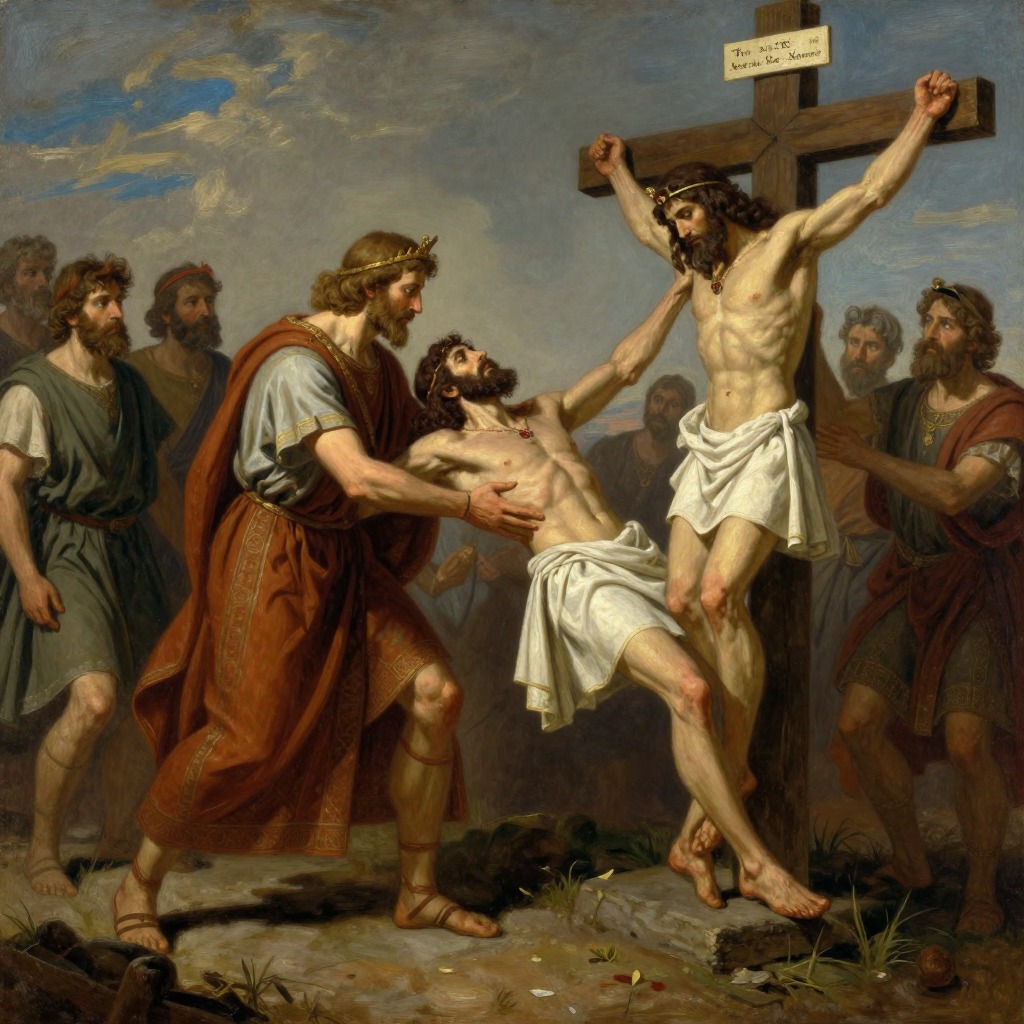
Bald Mountain (also called Golgotha) is the hill outside Yershalaim where Yeshua Ha-Nozri, Dysmas, Gestas, and Bar-Rabban are executed by crucifixion. It serves as the novel's central site of state terror, public spectacle, and private anguish, linking the ancient Jerusalem narrative to the Moscow satire through themes of cowardice, authority, and the failure of mercy.
Location and Setting
Bald Mountain is a barren, sun-scorched hill located a short distance from Yershalaim, accessible by the Jaffa road. The procurator Pontius Pilate orders the execution to take place there, and the site is cordoned off by a double cordon: a cavalry ala at the foot and a second cohort of the Lightning legion on a higher level, with a century under the command of Mark Ratslayer forming the innermost ring. The hill is devoid of shade, covered with scorching stones and big-thorned creeping plants, and inhabited only by green-backed lizards and the occasional dog. The sun beats down mercilessly, and the heat is so intense that the soldiers suffer from boredom and weariness, cursing the condemned men and wishing for a speedy death.
The Execution
The execution begins around noon on the fourteenth day of the spring month of Nisan. Three condemned men—Yeshua Ha-Nozri, Dysmas, and Gestas—are brought to the hill on a cart, each with a white board around his neck reading "robber and rebel" in Aramaic and Greek. They are followed by carts laden with freshly hewn posts, ropes, shovels, buckets, and axes, and six executioners. The centurion Mark Ratslayer, the chief of the temple guard, and a hooded man who had met privately with Pilate accompany the procession. About two thousand curious onlookers, undaunted by the infernal heat, follow behind, but by the fourth hour the sun has driven them all back to Yershalaim, leaving only two stray dogs and a single hidden spectator.
Yeshua suffers more than the other two in the first hour, falling into blackouts and oblivion, his face covered by flies and horseflies. Dysmas remains conscious, swinging his head rhythmically, while Gestas loses his mind and sings hoarsely about grapes. In the fifth hour, the tribune arrives from Yershalaim with an aide, and the executioner, obeying the hooded man's gestures, offers Yeshua a sponge soaked in water on the tip of a spear. Yeshua drinks greedily, then begs the executioner to give Dysmas a drink as well. The executioner removes the sponge, whispers "Praise the magnanimous hegemon," and gently pricks Yeshua in the heart. Yeshua twitches, whispers "Hegemon," and dies. The executioner then kills Dysmas and Gestas in the same manner. The hooded man examines each body, touches Yeshua's foot, and pronounces them dead.
Matthew Levi's Vigil and Despair
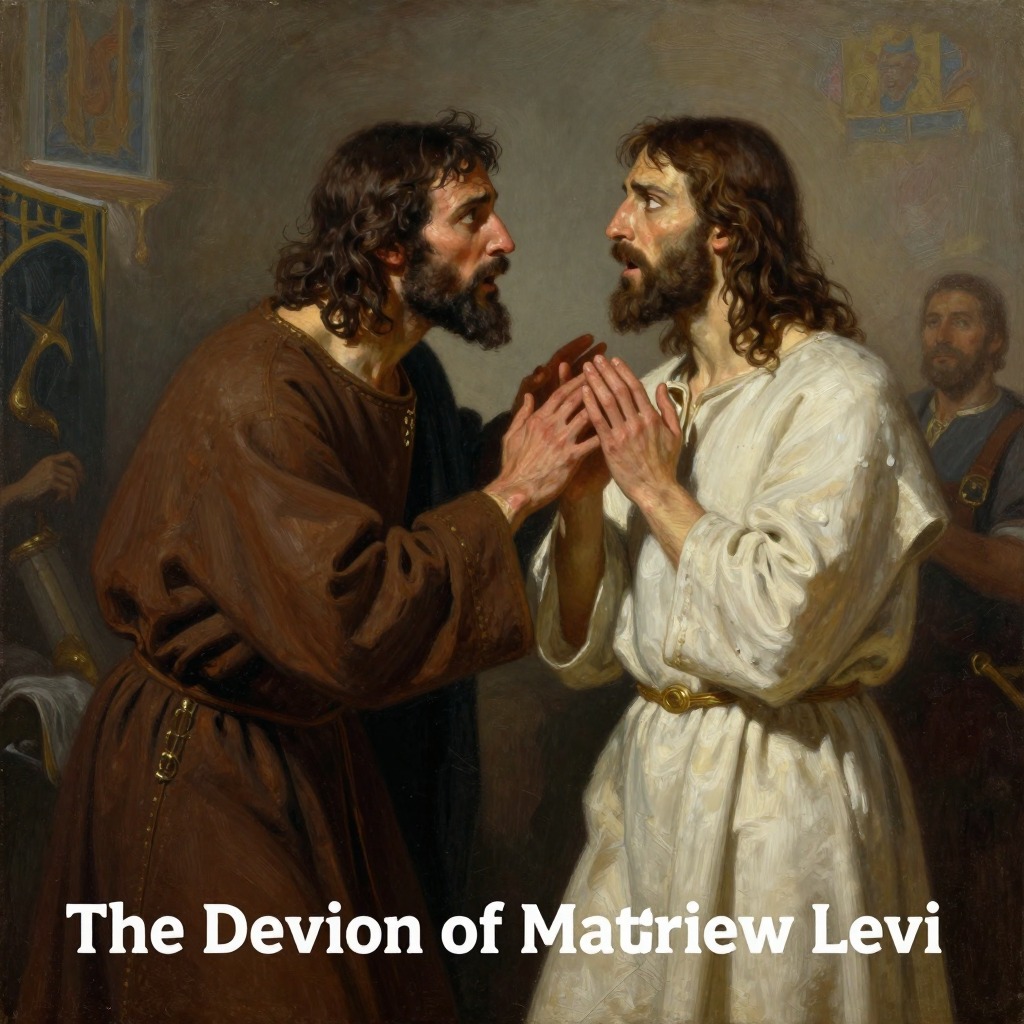
The sole spectator who is not a participant in the execution is Matthew Levi, Yeshua's disciple. He had arrived late, tried to break through the cordon, and was driven back by a spear butt. He then established himself on the north side of the hill, in a crevice under a sickly fig tree, where he sat on a stone for over three hours. His anguish is profound: he curses himself for letting Yeshua go alone to Yershalaim, for falling ill and being unable to follow, and for failing to procure a knife in time to stab Yeshua and save him from torture. He scribbles notes on a piece of parchment: "The minutes run on, and I, Matthew Levi, am here on Bald Mountain, and still no death!" and "God! Why are you angry with him? Send him death." In his rage, he flings the stolen bread knife to the ground, crushes his water flask, and curses God, shouting that he is a black god and that he will no longer believe in him. When a storm cloud rises, he begs for lightning to strike Yeshua's post, but the execution is already complete.
Aftermath and Significance
After the deaths are confirmed, the tribune orders the cordon raised, and the soldiers rush down the hill as torrents of rain pour down. Only Matthew Levi remains on the hill. He cuts the ropes binding Yeshua's body, embraces it, and carries it away, leaving the two other bodies and the three empty posts on the hilltop. The storm washes the hill clean.
Bald Mountain is the novel's most concentrated image of state power as public spectacle and terror. Pilate's order to execute Yeshua, despite his private recognition of the philosopher's innocence, is the pivotal act of cowardice that condemns him to two thousand years of waiting. The mountain's barrenness and the ritualized cruelty of the execution mirror the empty, theatrical terror of Stalin's Moscow, where citizens adjust to a normality built on fear and denunciation. The site also serves as the stage for Matthew Levi's crisis of faith, his curses against God echoing the novel's broader questioning of divine justice. The mountain's name, Bald Mountain, recalls the traditional site of witches' sabbaths, linking the historical crucifixion to the supernatural elements of the Moscow plot and suggesting that the same forces of evil and mercy operate across all times.